11 plus Vertical Code questions
Vertical Code is a non-verbal reasoning question type. A row of figures is given with a code printed under each one, and your child works out what every letter stands for, then builds the code for a figure that has none.
What a Vertical Code question looks like
Vertical Code is a non-verbal reasoning question type, and one of the few 11 plus questions built on drawn shapes that can still be set out honestly in words, because half of it is letters. A row of key figures is given, each in its own box with a short code printed underneath it. Every letter stands for one feature and always means the same thing, so the job is to work the meanings out from the key, then build the code for one more figure that is shown with a question mark where its code should be.
What makes this the vertical one is that the code sits under the figure as a string of letters rather than in the corners of its box, and so its length is not fixed: some questions use two letters and many use three. Horizontal Code, the other code type, always has two. That is the first thing to notice, because the number of letters is the number of features your child is hunting for.
An outer shape and an inner filling
This one is a real question, drawn as your child meets it.
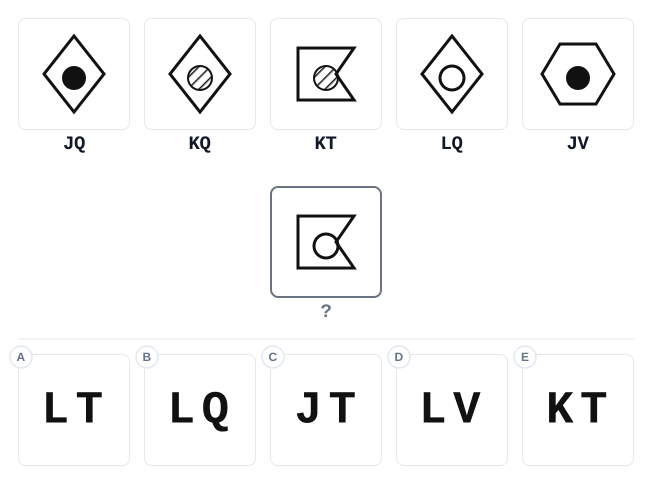
Start with a letter that turns up more than once. J sits under a diamond and under a six-sided shape, so J cannot be the outer shape; the one thing those two share is a solid black circle inside, so J is the filling. Q sits under three different fillings, all of them in a diamond, so Q is the outer shape.
| First letter | The circle inside | Second letter | The outer shape |
|---|---|---|---|
| J | solid black | Q | diamond |
| K | striped | T | pennant |
| L | plain white | V | six sides |
The test figure holds a plain white circle, so the first letter is L, and it sits in a pennant, so the second is T. The answer is A.
E is the trap this question is built around. KT is the whole code lifted off the only other pennant in the key, and a child who hunts for the matching picture rather than reading the features will find it, take its code and be wrong about the filling. B and D each keep the right filling and take the wrong outer shape, and C does the reverse.
Three letters, three features
Each of the four key boxes here holds three small squares in a row along the top, a line drawn across the middle, and a row of white squares underneath. The first has black squares along the top, one solid line across, two squares below, and the code BHR. The second has white squares along the top, a dashed line, two below, and CHS. The third has striped squares along the top, one solid line, three below, and DJR. The fourth has black squares along the top, two lines across instead of one, one square below, and BGT. The figure with a question mark has black squares along the top, one solid line, and three squares below.
B sits under the first box and the fourth. Those two agree on almost nothing: different lines, different numbers of squares below. The one thing they share is the black top row, so that is what B means.
| Place in the code | The feature | The letters |
|---|---|---|
| First | the top row of squares | B black, C white, D striped |
| Second | how many squares below | G one, H two, J three |
| Third | the line across the middle | R one solid, S dashed, T two lines |
Black top row, three below, one solid line: the answer is BJR. Two of the wrong options are whole codes borrowed from key boxes, BHR from the first and DJR from the third, and each is right about two letters out of three. BJS gets the top row and the count and breaks only on the line.
How to answer it
- Count the letters in one of the key codes. Two letters means two features to find, three means three.
- Find a letter that appears under two different figures. What those two figures have in common is what it means, and every other difference between them can be ignored.
- Settle the other letters the same way, then test each meaning against every key box. A meaning that fits three boxes and fails on the fourth is not the meaning yet.
- Describe the figure with the question mark out loud, one feature at a time, in the order the code uses, and say the code before looking at the options. If that figure turns out to be a repeat of one of the key figures, its code is the one printed under that box, but check every feature before deciding it really is a repeat.
- Check the option you have chosen one letter at a time, first letter first.
Common mistakes
- Copying the code from the box that looks most like it. Often one of the five options is exactly that code, put there for children who match on a resemblance instead of building the code feature by feature.
- Working from one box instead of two. A single figure cannot pin a letter down, because anything in it could be the reason. Meaning comes from what two boxes share.
- Getting one letter right and stopping. Nearly every wrong option is correct in all but one of its letters, so most of them look right until the last check.
- Assuming the first letter is the shape. It is whatever the key says it is: the shading, the count, the style of a line, the size, which way the figure points, or which piece is drawn in front.
- Giving the right letters in the wrong order. A few questions offer the correct letters jumbled up as one of the options, and it looks familiar at a glance because every letter in it is one you have just used.
How to practise 11 plus Vertical Code questions
The useful practice here is the talking, not the volume. Ask your child which two boxes they compared and what those two had in common, because that comparison is the whole method, and a child who can say it out loud will not be caught by the copied code. When they get one wrong, find which letter broke rather than looking at the answer. 11+ Daily has a Vertical Code project among the non-verbal reasoning skills it covers, and each answer explains what every letter stood for. Not every eleven plus area sets a non-verbal reasoning paper, so check what your own area’s test includes, and there is more on how much 11 plus practice a child needs each day.
Questions parents ask
What is a Vertical Code question in the 11 plus?
How many letters is a Vertical Code answer?
How do you work out what a code letter means?
What catches children out in Vertical Code questions?
Practise Vertical Code in 11+ Daily
Vertical Code is one of the 78 skill projects in 11+ Daily. The Today screen brings it round when it is the right thing to revise, and a wrong answer comes back in a later session until it is right. 14-day free trial, no card needed.

