Charts, graphs and tables (9)
A bar chart, two pictograms (one with a mean), a pie chart, a conversion graph, two line graphs, a Venn diagram and a timetable.
25 questions to print and sit in 25 minutes, with charts, graphs and diagrams on most of them. A separate answer sheet, and every answer explained at the back.
A bar chart, two pictograms (one with a mean), a pie chart, a conversion graph, two line graphs, a Venn diagram and a timetable.
Negative numbers, a number line, a function machine, fractions of a shape and of an amount, percentages, a ratio problem and a matchstick sequence.
Reading a clock, angles on a straight line, coordinates, a transformation, the cost of fencing a perimeter, 3D shapes, the volume of a cuboid and a shape built from cubes.
The answers at the back of the paper explain every question the same way.
Question 2
The bar chart shows the number of books read by children in a class each month. How many books were read in January?
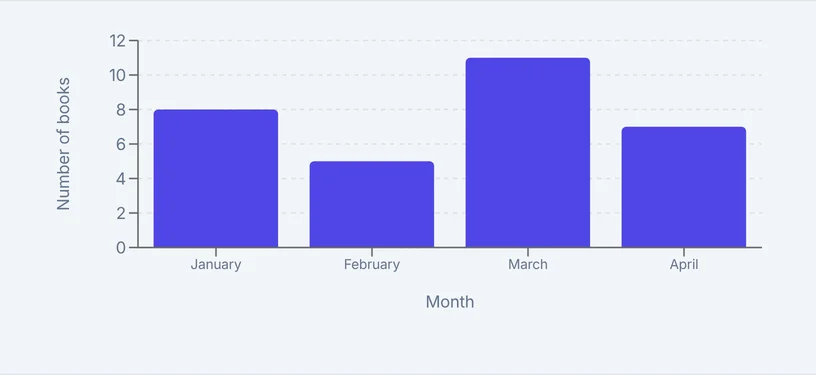
Answer: C. Find January on the bottom axis, run along the top of its bar to the scale on the left, and read the number there: 8. Lay a ruler across if the bar ends between two labels.
Why not the others
Question 16
Leo wants to put a fence around his rectangular vegetable patch. The patch is 11 m long and 6 m wide. Fencing costs £6 per metre. How much will the fencing cost in total?
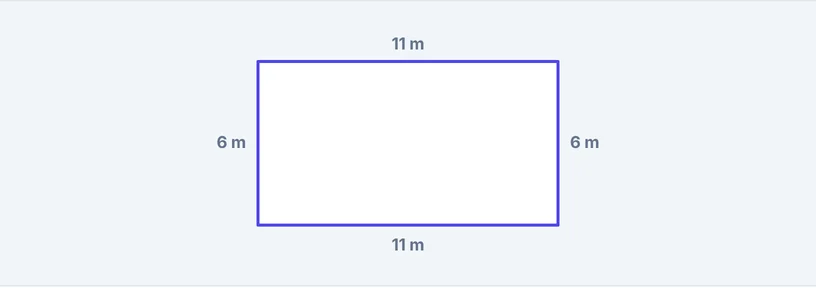
Answer: A. The fence goes all the way round, so find the perimeter: 2 × (11 + 6) = 34 m. Then 34 × £6 = £204.
Why not the others
The paper and its answer sheet. 25 minutes, somewhere quiet, a clock your child can see.
No help once the timer starts. A question your child cannot do is worth skipping and coming back to.
The answers at the back explain each one and name the skill, so you can see which skills to practise next.
Every question on this paper comes from the skills your child practises in 11+ Daily, from bar charts to ratio. The app chooses a short session each day from what they got wrong, have not tried, or have not done for a while, and explains every answer the way this paper does.
Start my free 14-day trial